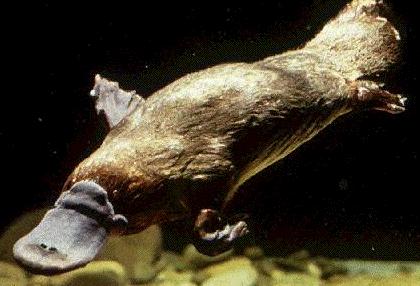
What do you call a cat-sized, venomous, egg-laying semi-aquatic mammal with the bills of a duck, the tail of a beaver, and the feet of otters? When European naturalists first encountered the platypus, they thought that it was an elaborate conspiracy against science. All oddities aside, platypuses are ones of the only mammals that are able to use electroreception (the only other one is the echidna, or spiny anteater). The platypus has the most sensitive sense of electroreception out of all the mammals, and the receptors are located in their bills. They swim in a characteristic side-to-side motion because they are able to determine the direction of any electrical source (this, of course, works better in water). Electroreceptors in the bill are coupled with mechanoreceptors to perceive both electric signals and tactile ones. Tiny pressure pulses are detected by the bill, which direct the platypus to its prey. To feed, the platypus will dive to the bottom of the stream and dig with its bill. When tiny electrical signals are detected by the muscular contractions of organisms are detected, it will then close in on its prey. Experiments with robot shrimps sending out electrical signals have also triggered this response. These mammals are unique in that it feed by neither sight nor smell. They also possess spurs in their hind legs that inject a venom causing tremendous pain to mammals as big as humans. They also store food in their cheeks while preying, similar to squirrels. These mammals make centaurs and unicorns look normal.
http://www.animalcorner.co.uk/venanimals/ven_mammalsPlat.html
Posted by Michael Shi